
Ragini Telangi-Miniature Painting
 Dimensions : 9 X 7 Inches
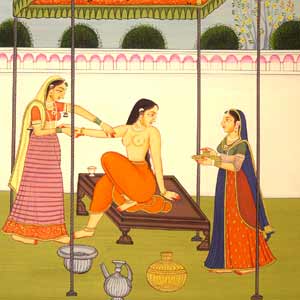
The painting personifies Ragini Telangi wife of Raga Hindola as a young lady seated on a chauki (low stool) having her body massaged with oil. One of the attendants holds a thali (platter) with oil in the bowl while the other rubs her arm. The painting seems to represent the advent of autumn season when the weather is dry. The undraped women is not painted in Kangra painting for its own sake however subjects like this provide an opportunity to the artists to paint the beauty of the female figure.
About Miniature Paintings
Miniatures are intricate, colorful illuminations or paintings, small in size, executed meticulously with delicate brushwork. The history of Indian Miniature Paintings can be traced to the 6-7th century AD. Miniature Paintings have evolved over centuries carrying the influence of other cultures. The miniature artists gave self-expression on paper, ivory panels, wooden tablets, leather, marble, cloth and walls. Indian artists employed multiple perspectives unlike their European counterparts in their paintings. The idea was to convey reality that existed beyond specific vantage point.
The Kangra Miniatures of the Pahari School made a mark in the 18th century. Though influenced by the Mughals, the Kangra School retained its distinctiveness. The paintings were naturalistic and employed cool, fresh colors. The colors were extracted from minerals, vegetables and possessed enamel-like luster. Verdant greenery of the landscape, brooks, springs were the recurrent images on the miniatures. Texts of the Gita Govinda, Bhiari's Satsai, and the Baramasa of Keshavdas provided endless themes to the painters. Krishna and Radha as eternal lovers were portrayed rejoicing the moments of love. The Kangra miniatures are also noted for portraying the famine charm with a natural grace. The paintings based on Ragmalas (musical modes) also found patronage in Kangra.
- Basohli Paintings
- Phad Paintings
- Folk Art Painting
- Art on Cloth
- Painting on Cloth
- Phad Folk Paintings
- Phad Folk Arts
- Indian Art
- Decorative Painting
- Art on Cloth
- Painting on Cloth
- Traditional Cloth Painting
- Folk Art on Cloth
- Photo frame
- Picasso Famous Painting
- Picasso Paintings
- Portrait of Marie
- Picasso Oil Painting
- Child With a Dove
- Pablo Picasso Paintings
- Glass Oil Painting
- Picasso Painting Gallery
- Picasso Reproduction
- Famous Picaso Painting
- Mughal Miniature Painting
- Miniature Art Painting
- Persian Painting
- Ram Darbar Painting
- Sanjhiart Painting
- Mugal Paintings
- Sarangi Player Painting
- Sarvadevtman
- Hunting Lions Painting
- Tribal Art
- Miniature Painting
- Miniature Art
- Kishangarh Miniatures
- Jaipur Miniature Painting
- Mithila Painting
- Painting of Krishna
- Radha Krishna Painting
- Indian Folk Painting
- Folk Art Decorative
- Krishna & Gopis
- Krishna & Mountain
- India Painting
- Paper Based Paining
- Painting Traditions
- Maithili Painting
- Ganesha Glass Paintings
- Classical Paintings
- Miniature Painitng
- Ragmala Painting
- Kangra Paintings
- Peacock Painting
- Rajasthani Paintings
- Rajput Paintings
- Painting Raga Chandra
- Rag Ragini Painting
- Ancient Paintings
- Kangra Painting
- Ragini Paintings
- Painting Raga Lalita
- Painting Raga Panchama
- Raga Sarang
- Raga Saranga1 Painting
- Raga Vasanta Paintings
- Ragini Gunakali Painting
- Ragini Kamodi Paintings
- Painting Ragini Kangra
- Kangra School Paintings
- Ancient Kangra Painting
- Traditional Painting
- Classical Paintings
- Raga Kumbha Painting
- Child Paintings
- Lord Ganesha Painting
- Pahari Paintings
- Old Man Painting
- Sitting Ganesha Painting
- Reverse Glass Paintings
- Tibetan Buddhist Art
- Thangka Painting
- Buddhist Paintings
- Handmade Paintings
- Primitive Folk Painting
- Tribal Art Painting
- Patachitra Paintings
- India Art Painting
- Thangka Painting
- Royal Boat
- Tirupati Balaji Painting
- Vasudev & Krishna
- Village Scene
- Famous Art Paintings
- Warli Painting
- Madhubani Art Painting
- Village Scene Paintings
- Wedding Painting


For Urgent Assistance : Email:[email protected]
Handicrafts Products
- Wooden Items
- Wall Hangings
- Vases
- Textile
- Silver Jewelry
- Painting
- Lacwork
- Jewelry
- Home Decor
- Hademade Items
- Candles
- Buddha
- Bed Spreads
- Apparels & Accessories
- Antique
Arts In India
Textile In India
Handicrafts In India
Craft From States
Sculpture In India
Jewelry From India
Gift Ideas In India
Accessories In India
Others
Painting
Explore the colors and images of incredible India at this rare online gallery of Indian Paintings, consisting magnificent Madhubani paintings, mysterious Warli paintings, Patachitras, Tribal Paintings, Thangka Paintings and also contemporary Indian art paintings.
