
Chowki Ganesha
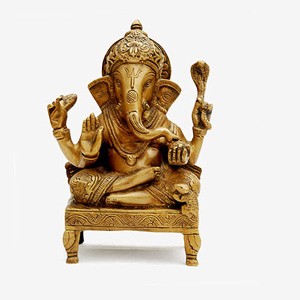 Dimension: 8 x 5 x 3 Inches
The image of the brass Ganesha seated on an ornate chowki (small stool) in a blessing gesture is finely executed. The intricate carving shows the facial expression, the folds of the garment, the jewels and the associated accessories of the image in detail. Seated crossed legs, he has four hands each performing the different function. His trunk is headed towards the modaka (An Indian Sweet) while his vehicle mouse is also seen in the bottom.
About Ganesha
Ganesha is one of the most loved Indian Gods. Depicted as a plump human body with the head of an elephant, Ganesha is the son of Shiva and Parvati, important deities in the Indian pantheon.
According to legend, Parvati asked Ganesha to guard her door when she went to bathe. Shiva who had spent some time away in meditation, returned to find Ganesha standing guard and refusing to let him enter his own home. Overcome by anger, Shiva killed the child, but stricken by remorse, promised Parvati he would bring Ganesha back to life and replace his head with that of the first living creature he saw next morning. This happened to be an elephant and so Ganesha was revived in his elephant headed form. To this day, elephants are worshipped as incarnations of Ganesha.
Ganesha is worshipped as the remover of obstacles, as the God of wisdom and success. His plump belly symbolizes prosperity, and his large forehead represents intelligence and foresight. He is invoked at the beginning of any journey, wedding ceremony and enterprise.
- Wine Glasses
- Amethyst Silver Necklace
- Antique Wooden Box
- Handmade Jewellery Box
- Wooden Jewelry Box
- Area Rugs
- Aromatic Candle Set
- Beaded Handbag
- Black Beaded Handbags
- Black Designer Handbag
- Blessing Ganesha
- Blue Bangle Set
- Mirrorwork Bangles Set
- Blue Cushion Cover
- Blue Lamp Shade
- Bodhisattva Chenrezi
- Brass Jewelry Box
- Bone Symmetry
- Camel Jharokha
- Aromatic Candle
- Chest of Drawers
- Child Wooden Toy
- Chowki Ganesha
- Christ Church
- Christmas Tree
- Christmas Ornaments
- Classic Snake Game
- Coastal Handicrafts
- Bengal Handicrafts
- Coaster Sets
- Collectible Card Game
- Colored File Folder
- Combo Offer
- Combo
- Buddha Statue Gift
- Crafty Brass Vase
- King Bed Spread
- String Puppets
- Cuttlery Set
- Dancing Ganesha
- Antique Ganesha Statue
- Deepak Bells Ganesha
- Deepak Ganesha Ornate
- Antique Brass
- Designer Stole
- Cotton Bed Spread
- Designer Handbags
- Silk Stole
- Designer Stole
- Quilted Cushion Covers
- Traditional Games
- Jhilmil Chuddi
- Jhilmil Chuddi Pink
- Jhilmil Chuddi Red
- Kundanbela Set Dark Blue
- Dinner Napkin set
- Divinity Jewelry Box
- Decorated Jewelry Box
- Aromatic Diya Set
- Durga
- Sofa Cushion Covers
- Enchanted Chest
- Wooden Chest
- Enthroned Ganesha
- Ganesha Idol
- Sewing Cushion Covers
- Fabric Lamp Shades
- Four Headed Manjushri
- Fruit Tray
- Ganesha Batik Painting
- GaneshJi Latkan
- Lord Ganesha Idol
- Soap Stone Ganesha
- Hindu Deity Idols
- Girl Brass Statue
- Goddess Durga
- Goddess Statue
- Goddess Kali
- Kundan Bangles
- Golden Brown Bangles
- Pillow Cushion Covers
- Gramophone Nostalgia
- Green Bangle
- Green Lamp Shades
- HanumanJi Idol
- Soap Stone HanumanJi
- High Neck Kurti
- Horse Cart
- Incense Coils
- Spiral Incense
- Indian Painting
- General Paintings
- Oil Paintings
- Cloth Paintings
- Modren Paintings
- Rajsthani Paintings
- Animal Paintings
- India Bangle Set
- India Handicrafts
- Warli Paintings
- Fashion Jewelry Bangles
- Lac Bangles
- Indian Tribal Art
- Gold Bangles
- Golden Mirrorwork
- Moghul Ganjifa Cards
- Traditional Toy
- Folk Paintings
- Woman Stole
- Wool Carpet Rugs
- Reindeer Candle Holder
- Silk Cushion Covers
- Royal Wooden Chests
- Royal Chests
- Saraswati
- Mauve Cushion Cover
- Pink Cushion Cover
- Seated Ganesha
- Antique Brass Statue
- Brass Ganesha Statue
- Wine Glasses
- Green Cushion Covers
- SoapStone Shiva Idol
- Soap Stone Sculptures
- Shrimad Bhagavad Gita
- Door Hangings
- Cushion Cover
- Designer Silk Stole
- Traditional Painting
- Snake Bracelet
- Standing Buddha
- Star Necklace
- Floor Candle Stand
- Nine Candle Stand
- Sterling Silver Bracelet
- Orange Cushion Covers
- Sushobhana Brown
- Sushobhana Red
- Swarnabela Green
- Swarnabela Maroon
- Lord Ganesh
- Terracoat Ganesha
- Discount Combo Offer
- The Holy Cross
- Three Reindeers
- Tic Tac Toe
- Antique Wooden Box
- Tree Candle Holder
- Dancing Dolls
- Tribal Art Work
- Tribes Man
- Splendor in Stone
- White Applique Bedspread
- White Designer Bags
- Home Furnishing
- Wholesale Rugs
- Wholesale Sculptures
- Toys And Dolls
- Miniature Pinting
- Traditional Games
- Wine Ice Bucket
- Antique Ice Bucket
- Wine Chiller
- Wine Bottle Chiller
- Steel Wine Chiller


For Urgent Assistance : Email:[email protected]
Handicrafts Products
- Wooden Items
- Wall Hangings
- Vases
- Textile
- Silver Jewelry
- Painting
- Lacwork
- Jewelry
- Home Decor
- Hademade Items
- Candles
- Buddha
- Bed Spreads
- Apparels & Accessories
- Antique
Arts In India
Textile In India
Handicrafts In India
Craft From States
Sculpture In India
Jewelry From India
Gift Ideas In India
Accessories In India
Others
Painting
Explore the colors and images of incredible India at this rare online gallery of Indian Paintings, consisting magnificent Madhubani paintings, mysterious Warli paintings, Patachitras, Tribal Paintings, Thangka Paintings and also contemporary Indian art paintings.
